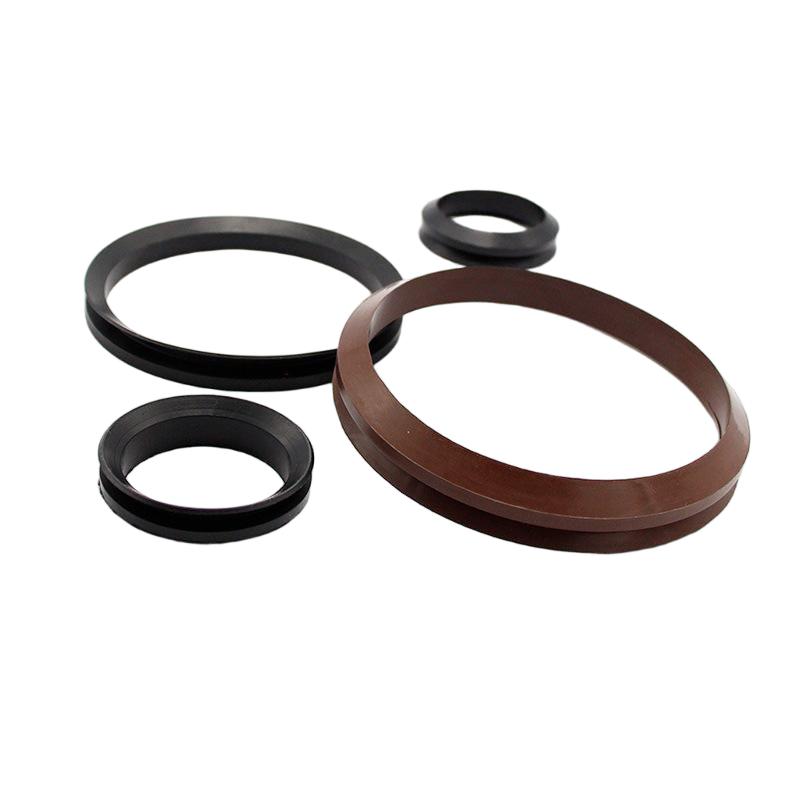
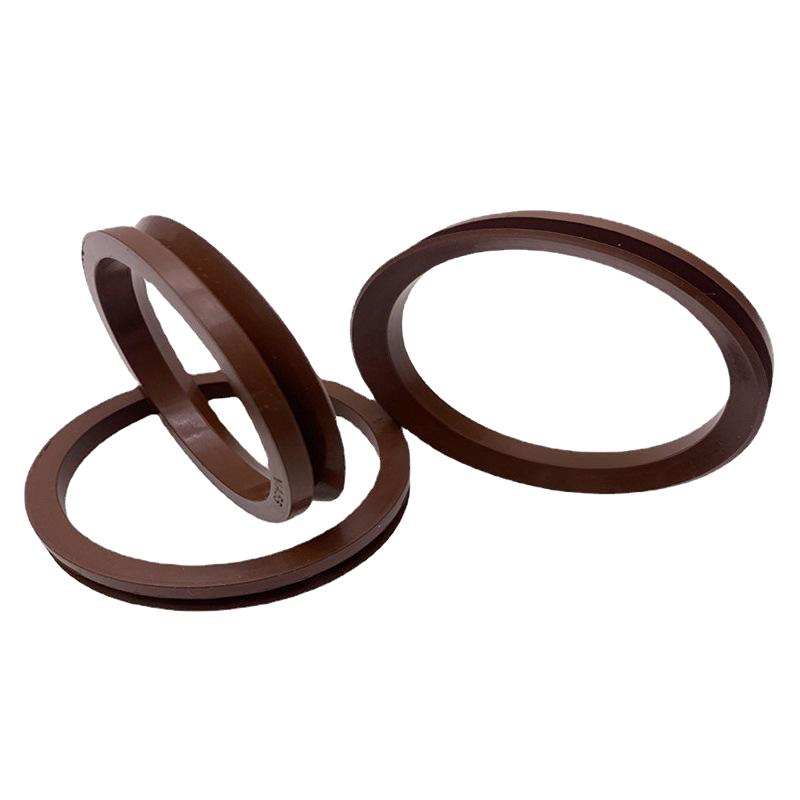
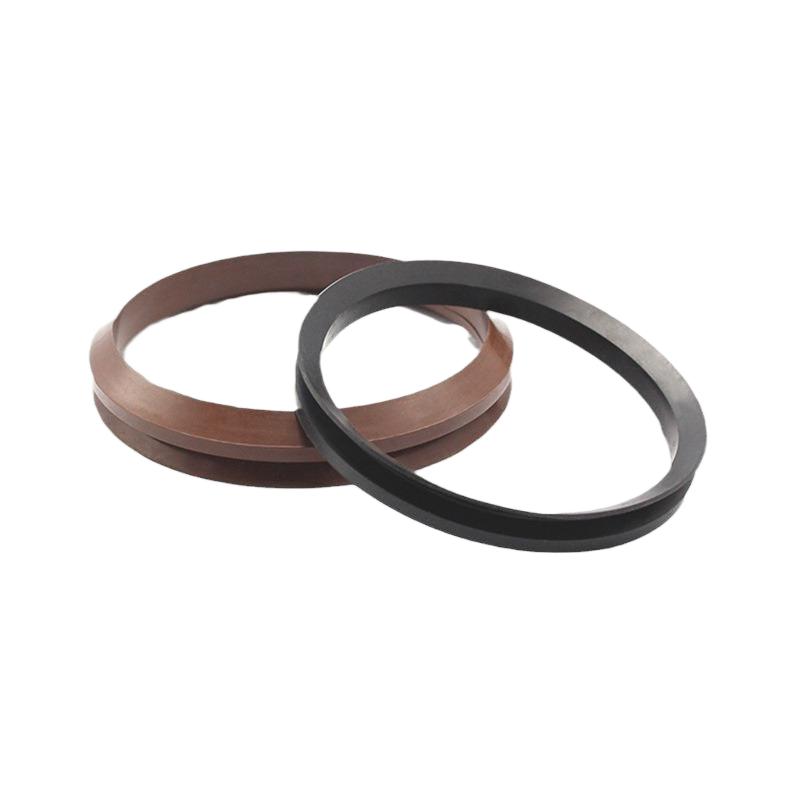
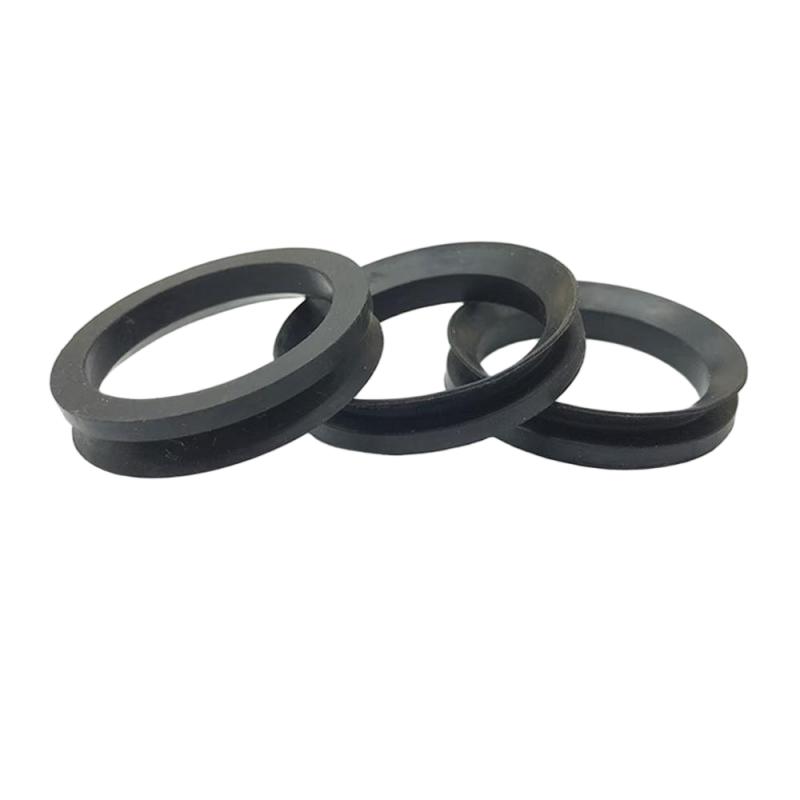
V-Ring Seals are all-rubber rotary sealing elements designed for axial sealing on rotating shafts. They are primarily used to protect bearings, gearboxes, motors, pumps, and other rotating components from dust, water, dirt, and oil contamination.
The VA, VS, VL, and VE profiles are four common V-Ring designs. They differ mainly in their cross-sectional geometry, mounting and retention method, and suitable shaft diameter range, allowing V-Rings to meet different installation and operating requirements.
Standard Materials
Nitrile Rubber (NBR)
NBR is the most commonly used material for V-Ring Seals. It offers good oil resistance, abrasion resistance, and mechanical properties, making it suitable for general industrial applications.
Fluoroelastomer (FKM)
FKM is recommended for applications involving higher temperatures, oils, fuels, or more aggressive chemical media. It provides excellent heat resistance and chemical resistance compared with standard NBR.
Key Features
- All-rubber construction
- Effective protection against water, dust, dirt, and oil contamination
- Designed for rotating shaft applications
- Simple and compact installation
- Accommodates minor shaft runout and misalignment
- Available in different profiles for various shaft sizes and applications
| Type | Typical Characteristics |
|---|---|
| VA | Standard V-Ring profile for general-purpose applications |
| VS | Robust profile for demanding industrial applications |
| VL | Compact profile suitable for limited installation space |
| VE | Larger profile designed for applications requiring increased sealing capability |
Typical Applications: Electric Motors, Gearboxes, Pumps, Bearings, Agricultural Machinery, Industrial Equipment, and Automotive Components.